
Value vs Non-Value: the lean principles for business
Value vs Non-Value: the lean principles for business
I’m into my 3rd month of zero social media consumption – zero except for a look at Linkedin every other day, with negligible engagement.
The jury is out as to whether I’m better informed or ill-informed as a consequence – I don’t feel that I have missed out on much and have benefited from the ‘not-knowing’ about plenty.
Plus my impulse and often very random purchases are down to nil.
Further scrutiny of the available data however would show that I am now spending more time on YouTube – those shorts are as tricky to avoid as anything on Tik Tok or Instagram, that’s for sure.
On the upside, I have stumbled across some interesting content that should appear on the Linkedin feed but never does.
Sperrin Metal at a time was synonymous with the Derry GAA, a name adorning the famous jersey in the 1990s.
Today, under new ownership, the company is fast becoming a case study for the principles of lean, courtesy of Ryan Tierney, CEO of Seating Matters.
I came across a video podcast where Ryan talks about the journey they are on following the recent acquisition of Sperrin Metals last year. I’m aware that headlines don’t always tell the truth but some of the changes and resulting consequences are worthy of note.
Since acquisition the company has made 8 or 10 pieces of significant machinery obsolete, replacing all with one piece of kit.
Before their arrival, staff were located across numerous offices on site, each one with a printer. Now all the staff are in the one place using one printer.
Tierney is on a bit of crusade, seeking to do to this region what Toyota and others did for Japan.
It would be hard to bet against anyone as evangelical as Ryan. Multiple brands have been developed as a result of his passion for Lean principles and countless C-Suite execs from across manufacturing and engineering in the north and beyond have sought his council and toured his exemplar facility.
Books, conferences, site tours and podcasts reflect but a sample of the demand for his knowledge. (Executives from Lexus / Toyota have made a visit to the Sperrin Metals and Seating Matters facilities.)
Lean didn’t begin as Lean – it began as a response to an existential problem for Toyota after WWII, well-documented elsewhere, giving birth to ‘Just In Time’, (JIT – produce only what’s needed). ‘Kaizen ‘(relentless improvement), ‘Jikoda’ (Automation with a human touch) and the new one for me ‘Muda’ – the removal of anything that doesn’t create value for the customer.
That was the one big takeaway from the Podcast that I watched where Tierney referred to everything as either ‘Value’ or ‘Non-Value’
He referenced a trip to Tokyo and a look in through the window of a barber shop, highlighting the only thing of value to the customer which begins the moment the scissors clip the first bit of hair.
Everything else is non-value.
The waiting, the sweeping the floor, the affixing of the apron – everything but the actual act of cutting hair.
Applying the same logic and principles to the factory setting he highlighted all of that ‘stuff’ within a manufacturing process that the customer doesn’t care about, sees no value in and doesn’t even want to pay for.
The cost of your electricity provider. The fact that you’ve 2 staff off on holiday at the same time. Production errors. Bad work flow. Old machines that are past their sell by date. (Remember value is defined as that which the customer is prepared to pay for.)
If you cannot manage a holiday rota, why should the customer pay their overtime?
“Most companies punish their customers for their inefficiencies.” I’m paraphrasing here but this was the line that stood out for me.
His view was, instead of focusing on how to add value all the time, focus on eliminating all of the non-value.
When you have employees dedicated to performance improvement then every non-value activity can be shaved a little or removed completely.
It becomes a thing of culture as much as production, a standard of excellence that works from the bottom up and the top down that is clearly infectious and definitely works.
Lean Made Simple is bringing to the masses a message that other companies have been integrating successfully for years.
For decades.
Mid Ulster is the beating heart of the manufacturing and engineering sector in the north if not the island of Ireland. The west of Ireland is the destination of choice for the biopharma and medical devices sector. The agri-sector plays an important role throughout the island, in fact most corners of Ireland can boast thriving industries where the most successful have become dedicated to lean and the importance of improvement.
Companies like Tirlan, Vision Built and CGL Retail have all been recognised for Lean excellence over the last number of years but there are 10s of 1,000s of other businesses in Ireland that are dedicated to making improvements – just like Tirlan, just like Sperrin Metals.
And fair play to all of them.
Thanks for reading.
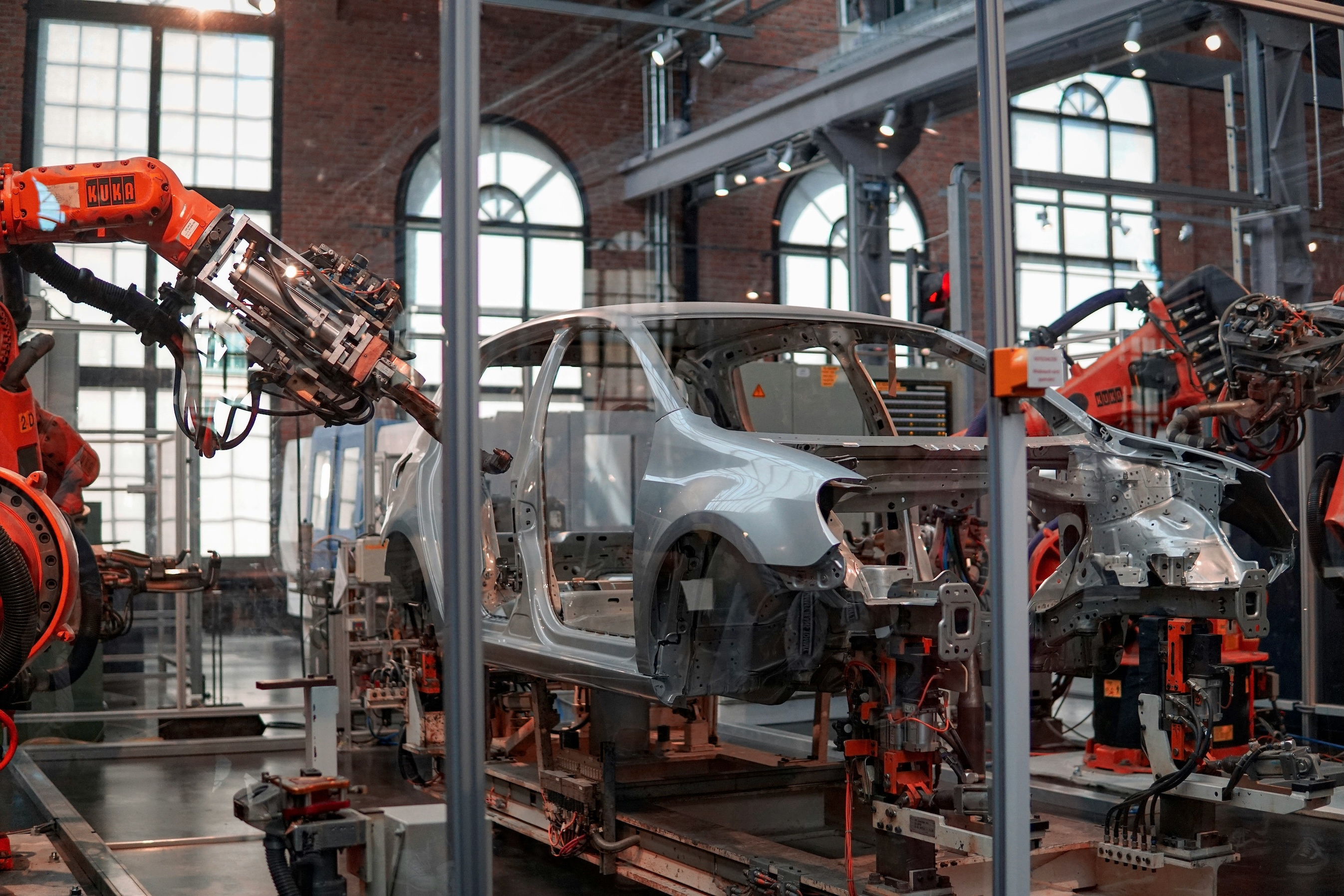
Lean principles for business. Photo by Lenny Kuhne on Unsplash